Tochigi · 栃木県
Nikkō
日光
Nikko works as a temple-and-nature route from Tokyo, combining ornate shrines, forested paths, and mountain scenery.
Tour Stops
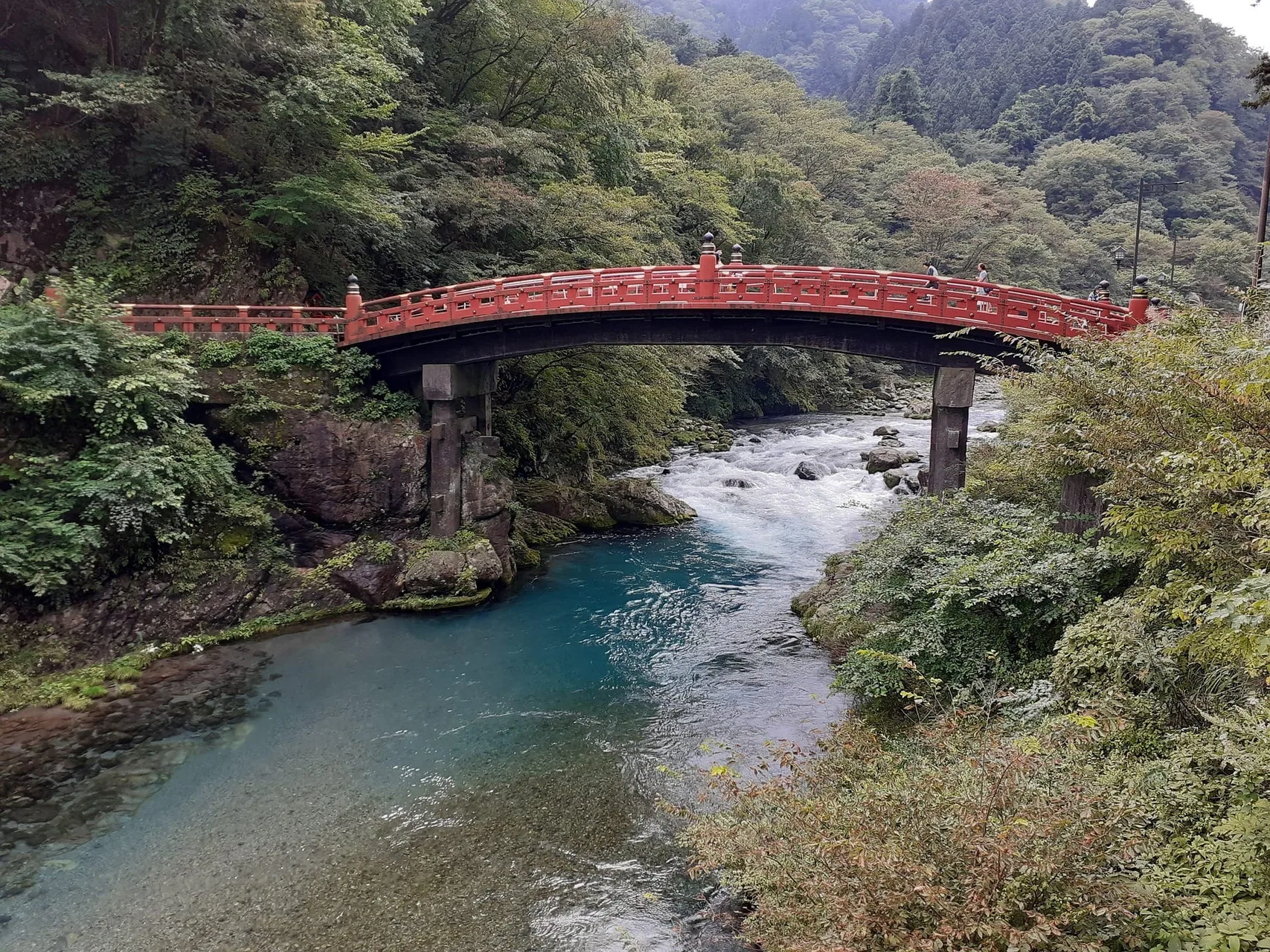
Shinkyo Bridge
A sacred vermillion bridge arching over the Daiya River gorge, marking the entrance to Nikko’s shrine district. Legend says the bridge appeared when the 8th-century monk Shodo Shonin was carried across the river on the backs of two serpents. The current structure dates to 1636 and was originally reserved for the shogun and imperial envoys. Against the deep green of the surrounding cedar forest and the rushing turquoise river below, it’s one of the most photographed scenes in Tochigi Prefecture.
Toshogu Shrine
The lavishly ornate mausoleum of Tokugawa Ieyasu, the founder of the Tokugawa shogunate that ruled Japan for 260 years. Built in 1617 and expanded in 1636, Toshogu is unlike any other shrine in Japan — every surface is covered in intricate carvings, gold leaf, and vivid lacquerwork. Among the thousands of carvings, three are world-famous: the “See no evil, speak no evil, hear no evil” three wise monkeys on the Sacred Stable, the Sleeping Cat (Nemuri-neko) above the gate to Ieyasu’s tomb, and the Imaginary Elephants carved by an artist who had never seen one. Over 15,000 artisans worked on the complex, and its total cost would be equivalent to billions of dollars today.
Kanmangafuchi Abyss
A scenic gorge formed by lava flows from nearby Mount Nantai, lined with a mysterious row of about 70 stone Jizo statues — guardian deities of children and travelers. The statues, many mossy and weathered, stand along a quiet forest path beside the rushing Daiya River. They’re known as the “Bake Jizo” (ghost Jizo) because, legend says, their number seems to change each time you count them. The walk is peaceful and atmospheric, especially in autumn when the gorge is framed by blazing foliage.
Kegon Falls
One of Japan’s top three waterfalls, Kegon Falls plunges 97 meters from the outflow of Lake Chuzenji into a misty gorge below. An elevator carved into the rock takes visitors to an observation platform at the base, where the full force of the cascade and the surrounding cliffside are most dramatic. In autumn, the falls are framed by crimson and gold foliage; in winter, the surrounding smaller cascades freeze into blue-white columns. The falls are at their most powerful after the rainy season and snowmelt in late spring.
Tamozawa Imperial Villa
A remarkable 106-room villa that blends architectural styles from the Edo, Meiji, and Taisho periods into a single complex. Originally built in 1899 as a summer retreat for the Crown Prince (later Emperor Taisho), the villa incorporates sections from a Tokugawa-era Edo residence and a Muromachi-period nobleman’s house. After extensive restoration in 2000, the interiors — with their delicate sliding doors, coffered ceilings, and western-style reception rooms — are open to the public. The surrounding Japanese garden is especially beautiful in autumn.
Lake Chuzenji and Embassy Villas
Lake Chuzenji, formed by a volcanic eruption of Mount Nantai 20,000 years ago, sits at 1,269 meters elevation and was a summer retreat for foreign diplomats in the Meiji and Taisho eras. The restored British and Italian Embassy Memorial Park villas, now open as museums, sit directly on the lakeshore with stunning views across the water to the mountains. The British villa’s veranda, designed to frame the lake like a painting, is particularly memorable. The area offers a glimpse of how international Nikko was during Japan’s early modern diplomatic era.
Included
- Temple and museum entrance tickets
- Transport, gas, highway tolls, parking
Not included
- Food