Tokyo · 東京都
Tokyo
東京
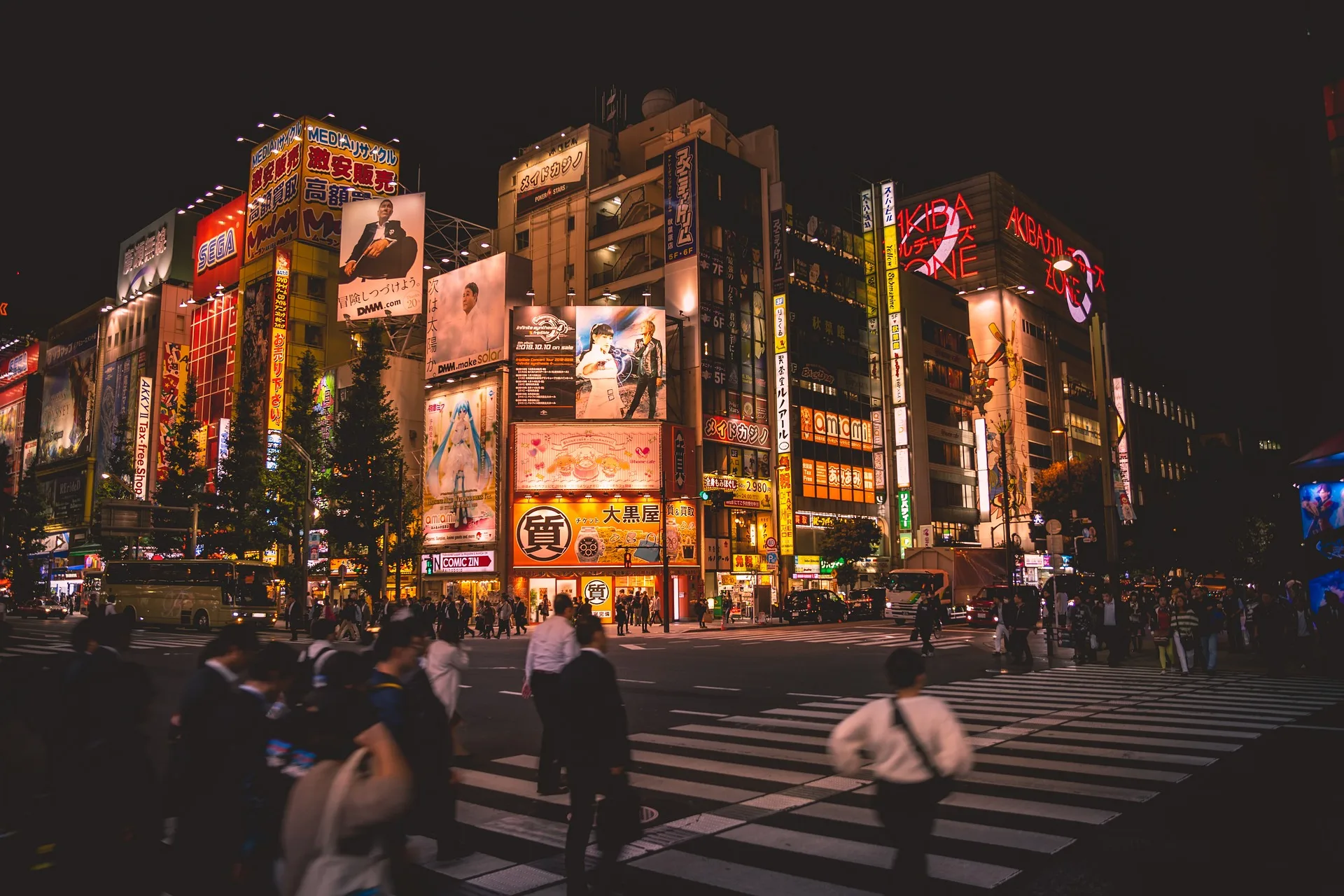
Tokyo works best when grouped into focused neighborhoods, mixing shrine visits, skyline stops, food streets, and evening districts.
West Side
Shibuya
Miyashita Park — A rooftop park built above Shibuya’s bustling streets, combining green space, skate facilities, and a terrace overlooking the city. Opened in 2020, it transformed an aging ground-level park into a multi-level urban retreat with shops and restaurants below and open sky above.
Shibuya Sky — A 360-degree open-air observation deck atop the Shibuya Scramble Square tower, 230 meters above the street. The rooftop experience includes a sky-edge platform where visitors can look straight down at the famous crossing below. On clear days, Mount Fuji is visible to the west. Book at least one month ahead — this is one of Tokyo’s most popular viewpoints.
Shibuya Scramble Crossing — The world’s busiest pedestrian intersection, where up to 3,000 people cross simultaneously from all directions when the lights change. Best viewed from above (Shibuya Sky or the Starbucks on the second floor of the QFRONT building) before walking through it yourself.
Hachiko Statue — A small bronze statue outside Shibuya Station honoring Hachiko, an Akita dog who waited at the station every day for his owner’s return — even for nearly 10 years after the owner’s death in 1925. The story became a symbol of loyalty across Japan, and the statue is now the most common meeting point in Shibuya.
Harajuku
Meiji Jingu — Tokyo’s most important Shinto shrine, dedicated to Emperor Meiji and Empress Shoken, set within a 70-hectare forest of 100,000 trees donated from across Japan when the shrine was built in 1920. Walking through the towering torii gate and along the gravel path into the forest, the noise of the city fades completely — a striking contrast to the Harajuku streets just outside.
Takeshita Street — A narrow, colorful pedestrian lane that has been the epicenter of Japanese youth fashion since the 1970s. Packed with quirky boutiques, crepe stands, cotton candy shops, and stores selling everything from vintage denim to kawaii accessories. It’s loud, crowded, and entirely unique.
Omotesando — Often called Tokyo’s Champs-Élysées, this tree-lined avenue is home to flagship stores designed by the world’s leading architects — Tadao Ando’s concrete masterpiece for Omotesando Hills, Toyo Ito’s sculptural Tod’s building, and Herzog & de Meuron’s crystalline Prada store. Even without shopping, it’s an open-air architecture gallery.
Shinjuku
Omoide Yokocho — A narrow alley of tiny izakaya bars and yakitori stalls dating back to the post-war black market era, squeezed along the train tracks near Shinjuku Station’s west exit. Smoke from charcoal grills fills the lane, lanterns glow overhead, and most seats are at the counter with room for just a handful of diners. Also known as “Piss Alley” — the name is historical, the food is excellent.
Golden Gai — A labyrinth of over 200 tiny bars packed into six narrow alleys, each seating just 5–10 people. Originally a post-war drinking district, Golden Gai became a haven for writers, actors, and musicians in the 1960s and still carries that bohemian spirit. Many bars have specific themes or clientele, and some charge a small cover — but the intimate conversations with bartenders and locals are a quintessentially Tokyo experience.
Tokyo Metropolitan Government Building — Twin 48-floor towers with free observation decks offering panoramic views of the city. On clear days, Mount Fuji appears to the west. The south tower is open evenings, making it one of the best free night views in Tokyo. Designed by Pritzker Prize–winning architect Kenzo Tange, the building’s Gothic-cathedral-like facade is impressive from the ground too.
Shinjuku Gyoen — One of Tokyo’s finest parks, originally a feudal lord’s residence, later an imperial garden, and now public. Three distinct garden styles sit side by side: a formal French garden, an English landscape garden, and a traditional Japanese garden with a pond and tea house. In spring, over a thousand cherry trees bloom here, making it one of the city’s top hanami spots.
Kabukicho — Tokyo’s largest and most vibrant entertainment district, centered on a neon-drenched square and radiating outward into blocks of restaurants, arcades, karaoke towers, and cinemas. Named after a kabuki theater that was planned but never built, the area transforms after dark into a dazzling spectacle of light. Best visited in the evening to experience the energy at full volume.
East Side
Odaiba
Tokyo Bay Skywalk — A waterfront promenade on the artificial island of Odaiba, offering views across Tokyo Bay to the illuminated Rainbow Bridge and the city skyline beyond. Especially striking at dusk when the lights come on.
Statue of Liberty Replica — A smaller replica of the original, standing on the Odaiba waterfront with Rainbow Bridge as a backdrop. Originally placed temporarily during a 1998 French cultural exchange, it proved so popular that a permanent copy was installed.
Life-size Gundam Statue — An 18-meter-tall replica of the RX-93ff Nu Gundam standing outside DiverCity Tokyo Plaza. The statue features scheduled light and motion shows where the head, arms, and panels move. Whether you know the anime or not, the engineering and scale are impressive.
teamLab Borderless — One of the world’s most acclaimed immersive digital art experiences, where projections flow across walls, floors, and between rooms with no fixed boundaries. The artworks respond to visitors’ presence and movement, making every visit unique. Book at least one month ahead — this regularly sells out.
Shimbashi / Yurakucho
Imperial Palace East Gardens — The only part of the Imperial Palace grounds open to the public, these gardens occupy the former site of Edo Castle’s innermost circles. Stone walls, moats, and guard towers from the Tokugawa era remain, while the gardens themselves are immaculately maintained with seasonal flowers and ancient trees. The contrast between the serene grounds and the skyscrapers of Marunouchi just beyond the moat is uniquely Tokyo.
Tokyo Station — Far more than a transit hub, Tokyo Station’s Marunouchi side features a meticulously restored 1914 red-brick facade designed by architect Tatsuno Kingo in a European Renaissance style. The building survived the 1923 earthquake and World War II bombings (with damage), and was fully restored to its original three-story glory in 2012. Inside, the domed ceilings of the north and south galleries feature detailed relief work.
Shimbashi Gado-shita — Authentic eateries and bars tucked under the railway arches near Shimbashi Station, where salarymen have gathered after work for decades. The gado-shita (literally “under the girder”) restaurants serve hearty, unpretentious fare — grilled chicken, oden, beer on tap — in a setting that captures old-school working Tokyo better than almost anywhere else.
Yurakucho Izakaya Alley — A strip of cozy, open-fronted yakitori bars and izakaya nestled under the JR tracks between Yurakucho and Shimbashi stations. Smoke rises from charcoal grills, regulars chat on plastic stools, and the rumble of trains overhead provides a constant backdrop. It’s one of the most atmospheric places in the city for an evening drink and bite.
Ginza
Kabuki-za Theatre — Japan’s principal kabuki theater, operating on this site since 1889. The current building (2013) faithfully recreates the ornate Momoyama-revival exterior of the original. Inside, elaborate productions featuring centuries-old stories, spectacular costumes, and dramatic stage mechanics like revolving platforms and trapdoors play to full houses. Single-act tickets are available for those who want a taste without committing to a full four-hour performance. Book one to two months ahead for full seats.
Hamarikyu Gardens — An Edo-period landscape garden on Tokyo Bay, once the private duck-hunting grounds of the Tokugawa shoguns. A tidal pond connected to the bay rises and falls with the tide, and at its center sits a tea house where visitors can enjoy matcha while watching the water. The juxtaposition of the 300-year-old pine trees and the glass towers of Shiodome directly behind is one of Tokyo’s most striking visual contrasts.
Tsukiji Outer Market — While the inner wholesale market moved to Toyosu, the outer market remains — a dense maze of over 400 small shops and stalls selling the freshest seafood, tamagoyaki (Japanese omelet), wagyu skewers, fresh oysters, and seasonal produce. The best time to visit is in the morning when the energy is highest and the selection is freshest.
Akihabara
Maid Cafes — A uniquely Japanese pop-culture phenomenon where waitstaff in elaborate costumes serve themed food and drinks with theatrical presentation. Born in Akihabara’s otaku (fan) culture in the early 2000s, maid cafes are now a mainstream curiosity and one of the most distinctly Tokyo experiences for visitors.
Pachinko Parlors — Japan’s chaotic, deafening take on arcade gambling. Rows of vertical pinball-like machines fill vast, neon-lit halls, and the sensory overload — flashing lights, cascading steel balls, blaring music — is an experience in itself. Though technically not gambling (prizes are exchanged off-premises for cash through a legal loophole), pachinko is a multi-trillion-yen industry and a cultural fixture.
Asakusa
Senso-ji — Tokyo’s oldest temple, founded in 645 AD according to legend, when two fishermen found a golden statue of Kannon (the goddess of mercy) in the Sumida River. The temple was a major pilgrimage site throughout the Edo period and remains the spiritual heart of old Tokyo. The main hall, rebuilt after World War II, houses the sacred Kannon statue (never displayed publicly).
Kaminarimon (Thunder Gate) — The iconic entrance to Senso-ji, recognizable by its massive red lantern (3.9 meters tall, weighing 700 kg) flanked by fierce wind and thunder god statues. Originally built in 942 AD, the gate has been destroyed and rebuilt several times — the current version dates to 1960, funded by Matsushita (Panasonic) founder Konosuke Matsushita.
Nakamise Street — A 250-meter shopping lane connecting Kaminarimon to the temple, operating for over 250 years. Nearly 90 stalls sell traditional snacks (senbei rice crackers, ningyo-yaki cakes), handmade crafts, folding fans, and souvenirs. It’s one of the oldest commercial streets in Japan and gives a vivid sense of Edo-era market atmosphere.
Sumida Park — A riverside park along the Sumida River, particularly famous during cherry blossom season when over 600 trees bloom along both banks. The park offers a classic view of Tokyo Skytree framed by sakura, and in summer hosts one of Tokyo’s biggest fireworks festivals (Sumida River Fireworks, late July).
Tokyo Skytree — Japan’s tallest structure at 634 meters, with two observation decks (at 350m and 450m) offering views that stretch to Mount Fuji, Tokyo Bay, and the endless urban expanse below. The tower’s design is inspired by traditional Japanese aesthetics — its base transitions from a triangle to a circle as it rises, echoing the curves of a Japanese sword. The adjacent Solamachi complex at the base has over 300 shops and restaurants.
Included
- Temple and museum entrance tickets
- Transport, gas, highway tolls, parking
Not included
- Food